
Jun 4, 2026
BPI’s Women Leaders are Shaping the Future of Home Performance
As the home performance industry evolves, leadership is about more than technical expertise. BPI leaders Amanda Hatherly, Lynn Franz, and Nancy Kaplan share how mentorship, collaboration, and workforce development are helping shape the next generation of professionals.
By: Diane Chojnowski
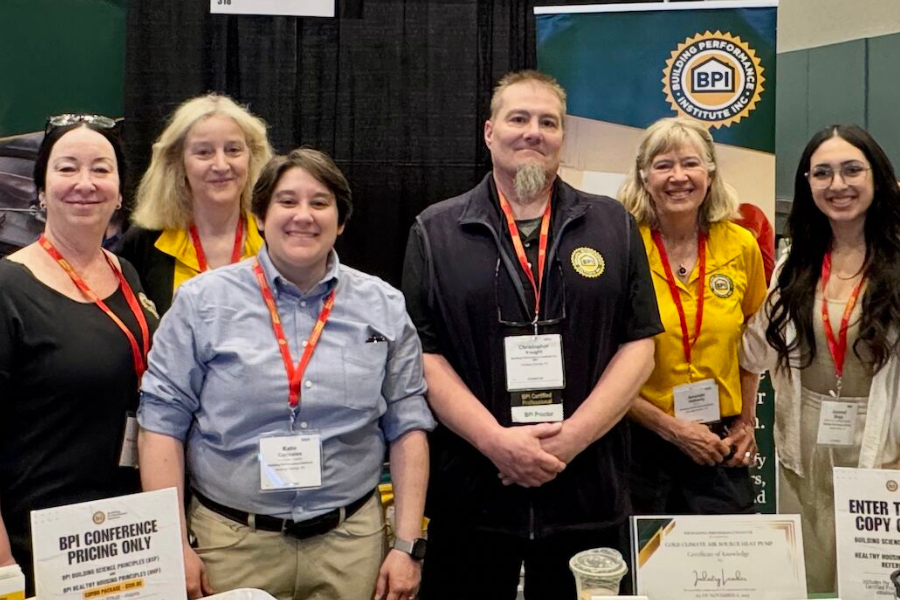
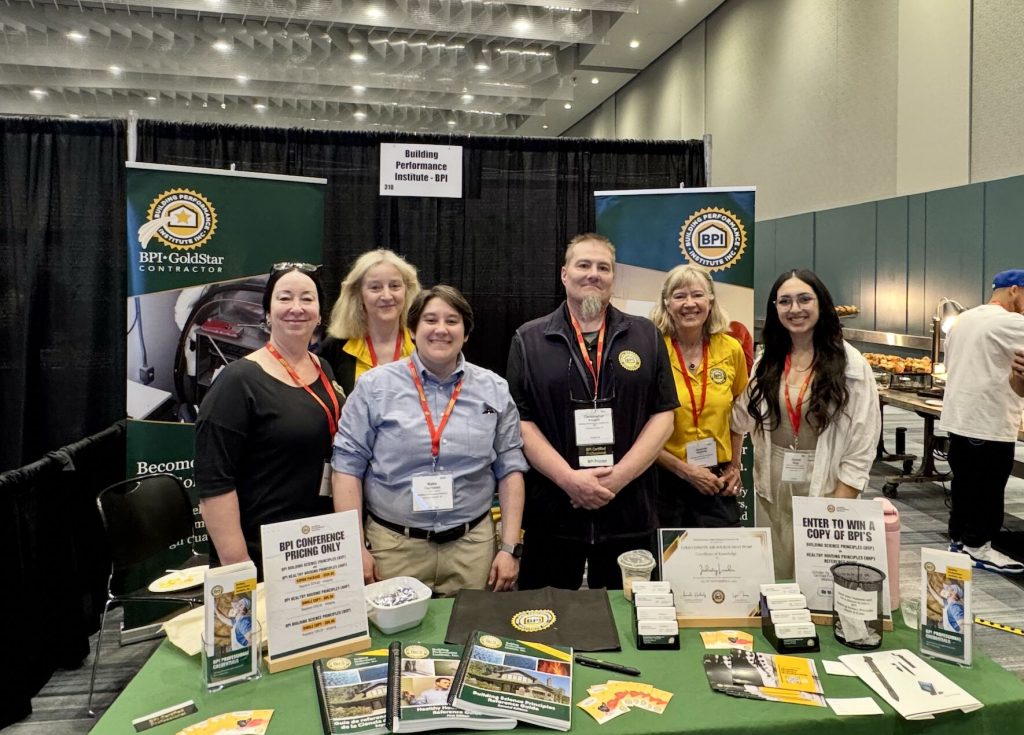
When the Building Performance Institute (BPI) team gathered at the recent Building Performance Association (BPA) National Home Performance Conference, one thing stood out immediately—many of the organization’s leadership positions were held by women. In a field that has traditionally been male dominated, that was notable and it sparked the idea for this story.
But conversations with BPI CEO Amanda Hatherly, COO Lynn Franz, and Director of Workforce Development Nancy Kaplan quickly revealed something more interesting than a traditional “women in leadership” profile.
Rather than focusing primarily on their own accomplishments, all three women spoke passionately about mentorship, workforce development, collaboration, and preparing the next generation for careers in home performance. Again and again, the discussions returned to the same themes: helping people grow, creating opportunity, and strengthening the industry itself.
Their stories reveal not only how leadership at BPI is evolving, but also how the home performance industry is becoming more collaborative, more accessible, and increasingly focused on developing people alongside buildings.
An Industry Drawing Talent from Many Backgrounds
Amanda Hatherly didn’t begin her career expecting to lead a national standards and credentialing organization. Like many people in the home performance industry, her path was anything but traditional.
Hatherly was introduced to the world of home performance through her husband’s work as a contractor. She became increasingly interested in environmental issues after watching Al Gore’s An Inconvenient Truth. Motivated to make a meaningful impact, she started an energy audit company in New Mexico and became the state’s first BPI-certified professional.
That decision placed her at the leading edge of a rapidly evolving industry. “When the opportunity came along, I was ready for it,” Hatherly says.
The timing coincided with the surge of investment tied to the American Recovery and Reinvestment Act (ARRA), which dramatically expanded weatherization and workforce training efforts across the country. Hatherly soon stepped into a leadership role at the Energy Smart Academy, supporting training across eight states and two territories. From there, her involvement with BPI deepened—first as a board member, then board chair, and eventually, CEO.
Her story reflects a larger truth about the home performance industry—there is no single path into the field.
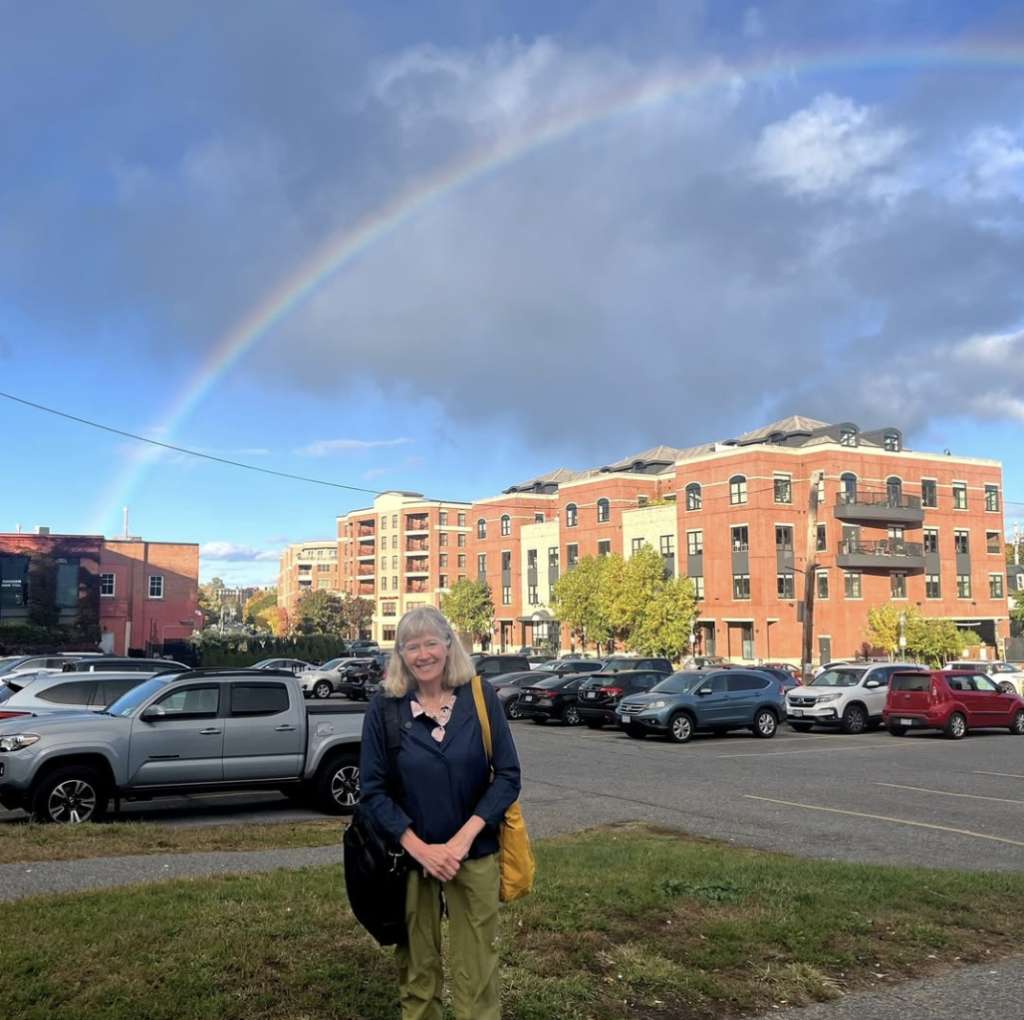
Lynn Franz, BPI’s Chief Operating Officer (COO), spent nearly two decades in finance before joining BPI during the height of ARRA funding. Initially hired as a temporary employee answering phones, she moved through a series of operational and leadership roles before becoming COO.
“That path allowed me to learn every aspect of the organization,” Franz says. “That experience gave me a strong foundation as a leader.” Today, she draws on that experience by helping others develop their own careers. Because she worked her way through multiple departments and responsibilities, she understands how important it is to help staff grow into new opportunities.
“One of the moments that really changed how I saw myself as a leader was hearing staff say things like, ‘Lynn trusted us to lead,’” she says. “That’s when you realize you’re not just managing people—you’re helping develop future leaders.”
Mentorship and internal development have become important parts of BPI’s culture. Franz regularly involves staff in operational and strategic discussions, so they gain a deeper understanding of how decisions are made and how the organization functions as a whole. “We need to help people see a path forward,” she says. “As people retire and transition out of the industry, we need the next generation ready to step into those roles.”
Nancy Kaplan, BPI’s Director of Workforce Development, came from yet another direction. Her academic background was in social work with an emphasis on child and family services. “I came into this totally green,” Kaplan says with a laugh, noting that “green” carries a different meaning in the building performance world.
She initially joined BPI as a temporary employee 17 years ago, helping support testing affiliates and administrative projects. But once she began to understand the mission of the industry, she says, “it’s hard not to be hooked.”
Surprisingly, many of the skills from her social work background translated directly into workforce development. “The skills I learned really carry over to what I do now,” she explains. “Building relationships with people, understanding what it’s like to be boots on the ground, understanding what it’s like for homeowners receiving services—it all connects.”
Together, the stories of Hatherly, Franz, and Kaplan reflect an industry that increasingly attracts people from a wide range of professional and educational backgrounds.
Expanding Leadership and Access
As more people enter the industry, organizations like BPI are also working to make training and leadership more accessible.
Hatherly points to significant changes in how technical information is communicated. Historically, many training materials and standards were written at a 12th-grade reading level or higher. Today, BPI and others are intentionally moving toward plain language and more accessible materials. “We’re thinking much more about how to make our content more usable and approachable for a wider audience,” Hatherly explains.
That shift includes:
- moving toward a 6th–8th grade reading level for technical content
- revising exam accommodations to reduce barriers for test takers
- expanding Spanish-language exams and materials
These changes are designed not only to improve comprehension, but also to help grow the workforce by lowering barriers to entry.
Franz believes representation also plays an important role. “We’re seeing more diversity in who’s leading and shaping this field,” she says. “More women are entering the industry and moving into leadership roles.”
At the same time, all three leaders emphasized that progress depends on collaboration across the industry as a whole. “There are a lot of really great men in this industry too,” Kaplan notes. “Leadership is really more about example than title.”
For Kaplan, leadership is not about authority or ego, but about trust, inclusion, and mentorship. “You can say someone has the title of leader,” she says, “but if nobody wants to follow you, are you really a leader?”
Reinforcing the “House as a System” Approach
Even as the industry evolves, one foundational principle remains central to BPI’s mission: understanding the home as an interconnected system.
Many homeowners, and even individual trades, still approach problems in isolation. HVAC contractors focus on heating and cooling. Plumbers focus on plumbing. Electricians focus on electrical systems. But building performance requires understanding how all of those systems interact.
“There’s still a gap in how widely the ‘house as a system’ concept is understood,” Hatherly says. “Closing that gap leads to better outcomes across comfort, health, and efficiency.”
Franz sees that disconnect regularly in the field. “You can install the best HVAC system available,” she says, “but if the home isn’t properly insulated and air sealed, the homeowner may still have comfort issues. The equipment isn’t necessarily the problem.”
That systems-based perspective also shapes how BPI approaches standards and credentialing. Kaplan emphasizes that certifications are not simply about passing a test. “We don’t want somebody just studying for the exam,” she says. “We want them to understand the work and be able to apply those skills in the field.”
Connecting People to Opportunity
As Director of Workforce Development, Kaplan describes much of her role as “making connections between people.” If one organization has developed a successful program or training model, she often connects them with others trying to solve similar challenges. “I don’t want people reinventing the wheel,” she says. “Collaboration is critical to success.”
She also sees mentorship as essential to the industry’s future. “We need to mentor people as they come up,” she says. “We need people to stay in the industry, find their passion, and continue growing.”
One story in particular stands out to her.
At an HVAC Excellence conference, an instructor told the story of being approached by a former student who asked if he remembered him. The student explained that after receiving training and certifications, he had gone on to start his own company. And then built a successful family business employing multiple family members. The instructor had no idea the impact his teaching had made!
For Kaplan, the story perfectly captures the ripple effect of workforce development. “It really changes lives,” she says.
Standards, Mentorship, and Quality Work
Kaplan says one of the industry’s ongoing challenges is ensuring that training and standards translate into consistent work in the field.
“We talk a lot in this industry about the cost of a callback,” she says. “Proper training and mentoring matter.”
She compares it to supervised field training, where experienced professionals mentor newer workers directly on job sites. “Each time that person goes out, they know a little more and can do a little more with confidence,” she explains. That investment in quality ultimately benefits everyone involved—from contractors to homeowners.
Expanding the Scope of Home Performance
BPI’s work continues to evolve alongside the industry itself.
One current initiative is the development of a new water audit protocol for existing homes, prompted by collaboration with the Alliance for Water Efficiency. The resulting 30-page annex to BPI’s ANSI 1200 standard addresses both indoor and outdoor water use and provides a flexible framework communities can adapt to local needs.
The effort reflects a broader shift in home performance toward issues like healthy homes, electrification, decarbonization, and water conservation. “There’s increasing focus on all of these areas,” Franz says. “The scope is growing.”
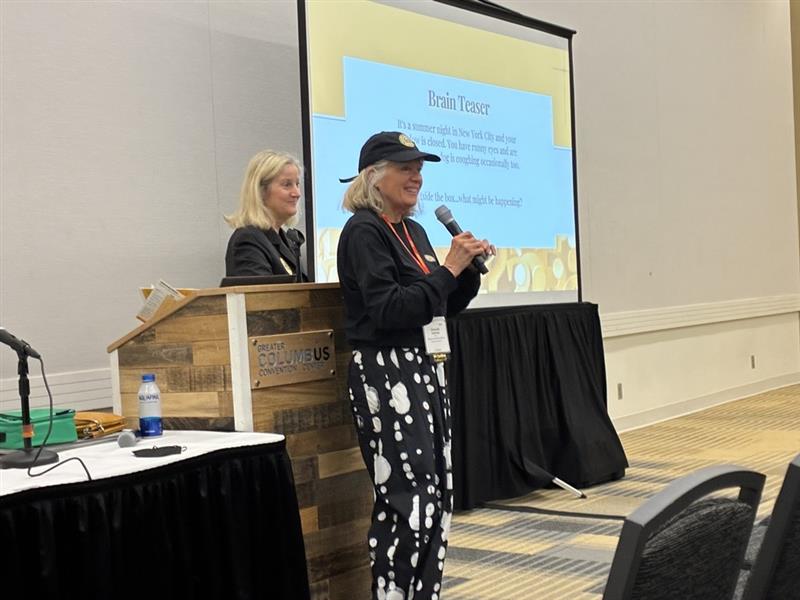
That broader understanding of healthy homes also includes how housing conditions affect families—and even pets. At BPA’s recent National Home Performance Conference, Hatherly and Environmental Health Scientist Kevin Kennedy presented an informative session highlighting research showing elevated exposure to contaminants in pets due to their proximity to floors and their faster breathing rates.
For homeowners, these kinds of examples make building performance issues feel more immediate and personal. “It helps people understand the impact in a very real way,” Hatherly says.
Looking Ahead
For the leaders at BPI, the future of home performance depends not only on technical expertise, but on people: mentoring new workers, developing leaders, and helping individuals see the value of their work.
Franz believes one of the industry’s greatest strengths is its willingness to invest in people and help them grow. “We need the next generation to feel prepared and supported,” she says. “That’s how the industry continues to move forward.”
Kaplan agrees that helping people recognize the importance of their work is essential to long-term success. “When people understand that what they do makes a difference for other people,” she says, “they connect with it in a much deeper way.”
Meet the Author

Content Specialist
Diane Chojnowski is the Content Specialist for the Building Performance Association. In this role, she contributes articles to the BPA Journal, resources to the BPA Resource Library, and manages the BPA Training Library. An industry veteran, you may know her from her years as the BPA Community Manager.
A native Iowan, Diane is passionate about the environment and all things green. She enjoys collaborating with industry experts to develop educational resources and tools that support energy efficiency and sustainable building practices.
Email Diane if you have resources, training, or articles you’d like to share: dchojnowski@building-performance.org