
Oct 5, 2026
From the Archives: Alaska’s Home Performance Story
Alaska’s home performance challenges aren’t new. The industry has been working through them for years and BPA has been documenting that work along the way.
By: Macie Melendez
Alaska’s home performance challenges aren’t new. The industry has been working through them for years and BPA has been documenting that work along the way.
From weatherizing remote villages to rethinking energy systems, the stories in our archive capture the realities, solutions, and lessons that have shaped building performance work in Alaska. They also show how much that work has always depended on more than technology alone: geography, transportation, workforce, funding, local knowledge, and the unique needs of Alaska communities all play a role.
As BPA brings the Alaska Home Performance Conference & Trade Show to Alaska this October, we’re looking back at three pieces from the archive that offer a glimpse into where this work has been and the questions that continue to shape where it’s going.
Alaska Weatherization: When Getting There Is Part of the Work
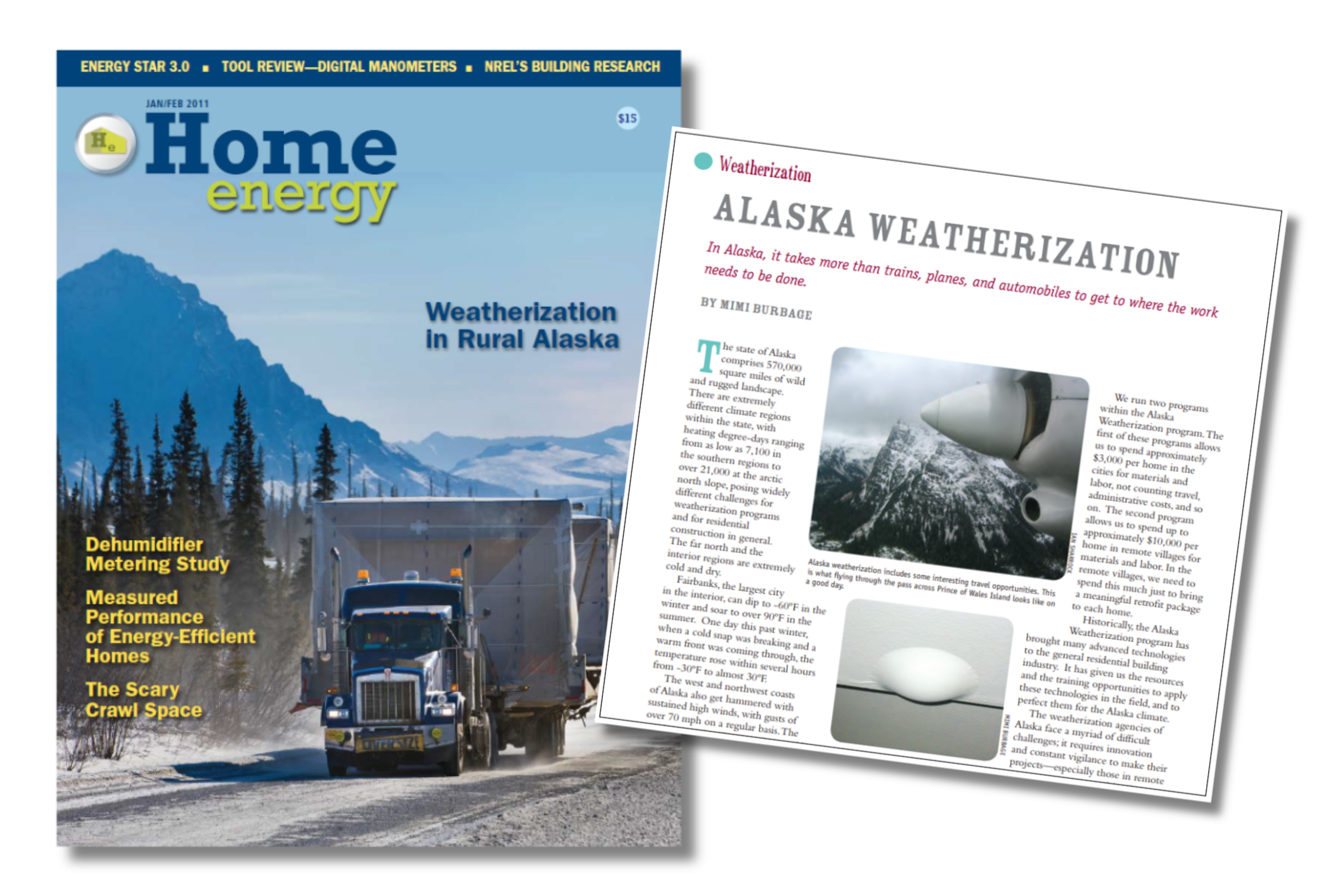
Originally published in Home Energy magazine, July/August 2007
Before it was named the BPA Journal, our industry magazine was called Home Energy. Under that name, more than 15 years ago, Home Energy took readers into the realities of weatherization across Alaska. The article, “Alaska Weatherization,” featured perspectives from Mimi Burbage, Ian Sharrock, and Ralph Lee, highlighting the dramatically different conditions across the state and the logistical challenges of reaching the homes that need work.
“In Alaska, it takes more than trains, planes, and automobiles to get to where the work needs to be done.”
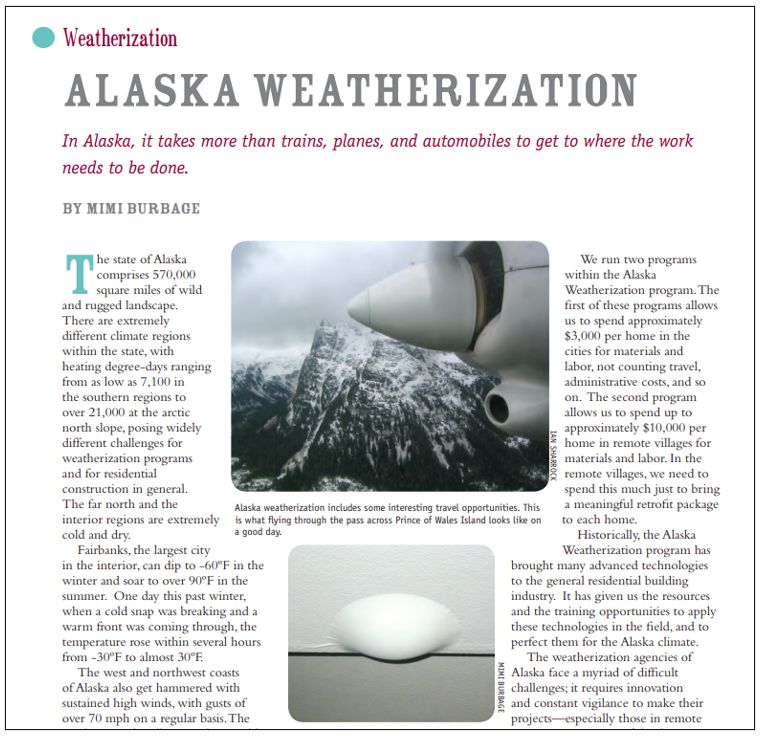
For weatherization professionals working in rural Alaska, transportation can be the first challenge to solve. Materials and equipment could require a combination of commercial flights, small planes, boats, barges, and four-wheelers to reach a jobsite. In some communities, construction materials could take months to arrive.
But the article makes clear that logistics were only part of the equation. Extreme temperatures, limited construction seasons, housing conditions, energy costs, and access to skilled workers all shaped how weatherization work could be approached.
And despite those challenges, Alaska’s weatherization programs were also helping advance building practices, giving professionals opportunities to apply and refine technologies specifically for Alaska’s climate.
Weatherization in Rural Alaska: Retrofitting Rampart
Originally published in Home Energy magazine, 2011
A few years later, Home Energy returned to rural Alaska with the story of weatherization work in Rampart, a small community along the Yukon River.
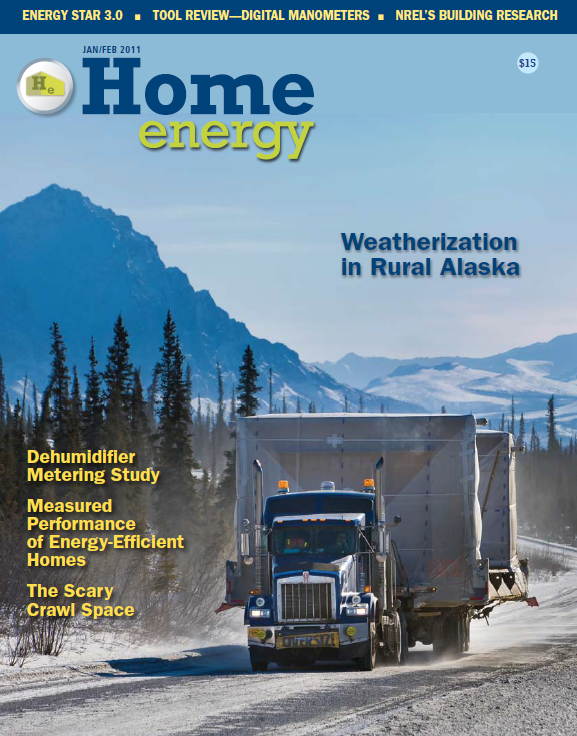
At the time, the Interior Regional Housing Authority (IRHA) was building out its weatherization program across an area covering 42 villages. The work in Rampart illustrates how energy efficiency, housing conditions, transportation, funding, and community capacity all came together in a single project.
“Anything that the IRHA weatherization program can do to help people conserve energy and be more efficient makes a big difference in rural Alaska.”
IRHA weatherized five homes in Rampart during the summer of 2010, with work focused on priorities including air sealing, insulation, heating systems, and ventilation. Getting the work done required planning well in advance, coordinating multiple funding sources, transporting materials by both air and river, and hiring local workers.
The project also demonstrated the value of collaboration. Additional funding helped expand the scope of work, while locals participated in weatherization and community projects.
The story is a reminder that building performance work has always been about more than individual measures. It is about finding ways to make improvements work within the realities of a particular community.
Alaska’s Largest Solar-Thermal System: A Lesson in the Whole System
Originally published in Home Energy magazine, 2014
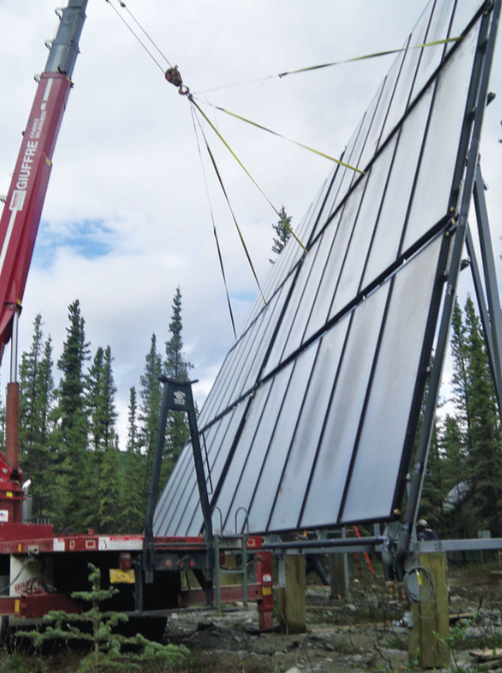
But, Alaska’s building performance story isn’t limited to weatherization. In 2014, Home Energy documented another kind of project: the development of a large solar-thermal system serving the Denali Education Center.
The project began with a familiar challenge for the state: rising energy costs. It asked the question: How do we reduce the energy load of a seasonal facility? The answer involved a 36-collector solar-thermal array, a 2,800-gallon heat-exchange tank, and more than 1,300 feet of insulated distribution piping serving multiple buildings.
When all was said and done, the project revealed the importance of looking beyond a single technology or component. Existing plumbing, water heaters, demand, storage, controls, maintenance, and distribution all influenced the system’s performance.
The article ultimately describes the project as a work in progress and emphasizes something this industry knows very well: Successful retrofits require understanding how the pieces work together.
Looking Ahead
These stories were published in 2007, 2011, and 2014. Now in 2026, the technologies, programs, costs, and circumstances have changed, but many of the fundamental questions remain.
How do we deliver effective work in communities that are difficult to reach? How do we account for Alaska’s diverse climates and housing stock? How do we build local workforce capacity? How do we make improvements that work as a whole system?
Those questions have been part of Alaska’s home performance conversation for years. And that conversation is still happening. This October, the Alaska Home Performance Conference & Trade Show brings contractors, housing professionals, program leaders, researchers, and others together to continue that conversation—all building upon the experience and lessons that have come before.
Because Alaska’s home performance story didn’t start with this conference. Rather, this is the next chapter.
Meet the Author

Editorial Content Manager
Macie Melendez is the Editorial Content Manager. In this role, she focuses on planning, creating, and managing high-quality content that aligns with the Building Performance Association’s brand and voice. She oversees the editorial calendar, manages content workflows, and ensures content quality across various platforms. She has been an editor in the home performance industry for nearly 15 years.
Macie has been a writer and editor for two decades, working in various mediums from print magazines and newspapers to online education and script writing. She is passionate about the written word and helping the planet—even if that comes in the form of editing. Macie holds a BA degree in English from San Diego State University.